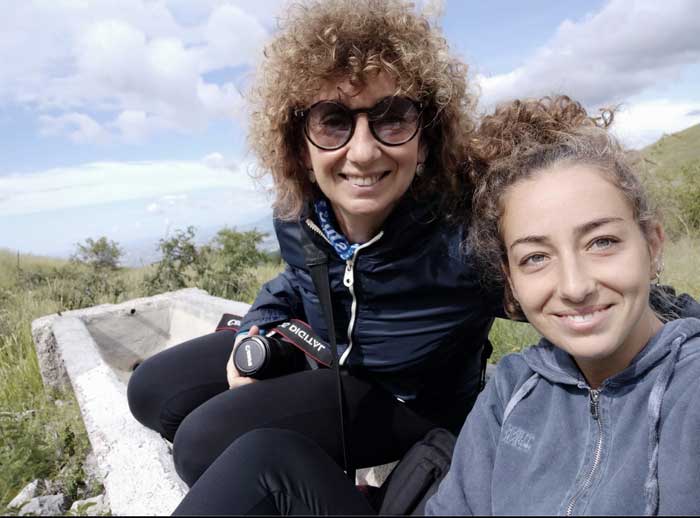
Martina Zimmitti is an Italian ethologist and marine mammal specialist with over a decade of experience in the Maldives. She has combined academic research with fieldwork, working as both a university lecturer and marine professional. Since 2019, she has dedicated her work to Top Class Cruising, promoting a model of tourism that blends exploration with conservation. As boat manager of M/Y Sachika, she led a shift toward more responsible practices, including the decision to stop shark feeding and whale shark searching. Her work focuses on education, ethical tourism, and protecting marine ecosystems through informed, conscious choices.
What was your first interaction ever with sharks like?
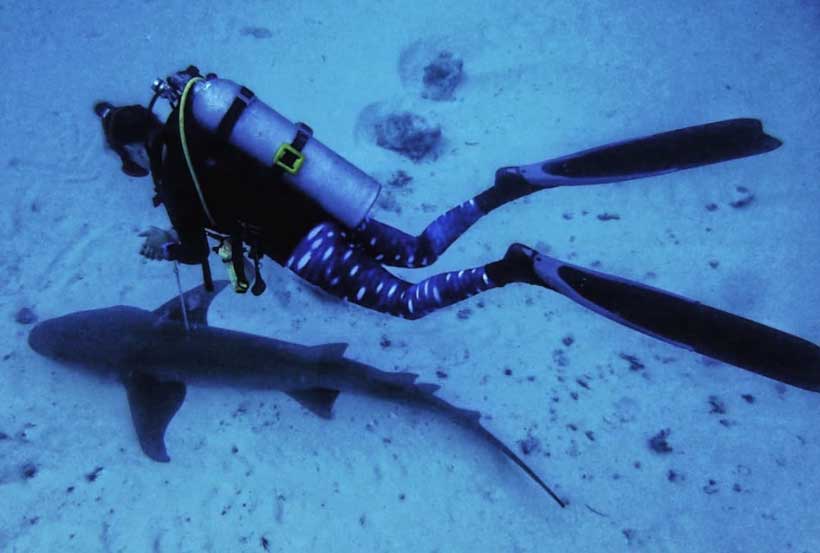
To be honest, I don’t remember my first interaction with sharks—and that says a lot. I have never perceived animals as something separate from myself or belonging to a different world. Their presence has always felt natural. Underwater, I feel calm and fully connected, and sharks are simply part of that environment. We observe each other with curiosity, without altering our behaviour. There is no tension, no fear—just coexistence. The most meaningful encounters happen when nothing is forced. In those moments, you don’t feel like a visitor. You feel part of something bigger, and that is where true safety and beauty exist.
How does Top Class Cruising ensure fair scuba diving practices?
Top Class Cruising ensures fair diving practices by aligning every experience with respect for marine life rather than guest expectations. This means no chasing, no feeding, and no manipulation of wildlife. In 2020, after witnessing the consequences of shark feeding, the company made the decision to stop all related activities. Later, it also stepped away from whale shark searching in South Ari, where tourism pressure has significantly impacted the species. These decisions come with economic risks, but they reflect a clear principle: nature is not a product. By prioritising ethics over profit, Top Class creates experiences that are authentic, educational, and truly sustainable.
Which are the most endangered oceanic animals? What is Top Class Cruising doing to protect them?
Many iconic marine species in the Maldives—such as whale sharks, manta rays, turtles, and reef sharks—are increasingly threatened by human activities. Habitat modification, overfishing, ghost nets, dredging, and uncontrolled tourism all contribute to their decline. Top Class Cruising focuses on practical action. The company supports research organisations such as Manta Trust, Olive Ridley Foundation, and the Maldives Whale Shark Research Programme through daily data collection. It has reduced onboard plastic use and educates guests on responsible behaviour. Most importantly, it refuses to engage in harmful practices like shark feeding, promoting a model of tourism that protects wildlife rather than exploiting it.
What are some threats faced by sharks in Maldives?
Despite being a shark sanctuary, sharks in the Maldives face increasing pressure from human activities. Boat traffic often leads to injuries, including propeller strikes, while tourism can alter natural behaviour. One of the most critical issues is shark feeding. This practice conditions sharks to associate humans with food, making them less cautious and more likely to approach boats and divers. Scientific research shows that this creates long-term ecological imbalances. It also makes sharks easier to locate, increasing their vulnerability to illegal or opportunistic fishing. Protecting sharks means keeping them wild, not conditioning them to depend on human interaction.
How are local communities in Fuvahmulah that are feeding sharks causing harm?
Shark feeding in Fuvahmulah may appear controlled, but it creates serious long-term risks. By conditioning sharks to associate humans with food, their behaviour changes—they become more dependent, less cautious, and more likely to approach people. If a serious incident were to occur, public reaction could lead to drastic measures against sharks. Alternatively, continued feeding over time can disrupt the ecosystem, altering predator-prey dynamics and weakening environmental resilience. For the local community, both scenarios carry risks: sudden reputational damage or gradual ecosystem decline. What may seem beneficial in the short term can ultimately harm both the environment and the sustainability of tourism.
What makes tiger shark diving unique?
Diving with tiger sharks is an extraordinary experience because it offers a direct connection with one of the ocean’s top predators. Their size, movement, and presence command respect and create a powerful emotional impact. Unlike many marine encounters, there is a strong sense of awareness—you are sharing space with a highly evolved animal in its natural environment. When interactions are not forced, these encounters are calm and deeply meaningful. It is not about adrenaline, but about understanding. Observing a tiger shark behaving naturally allows divers to appreciate its true nature, beyond myths and fears, and to feel part of a balanced ecosystem.
Is tiger shark diving safe?
Tiger shark diving can be safe when conducted responsibly and without altering animal behaviour. Sharks are not naturally interested in humans as prey, and most encounters are calm when interactions remain natural. The risk increases significantly when food or chum is introduced. Feeding creates competition, changes behaviour, and can trigger unpredictable responses. These artificial conditions are where most incidents occur—not in the wild. Safety is therefore directly linked to ethics. By avoiding practices that manipulate animals, divers can experience these encounters in a controlled and respectful way, where both humans and sharks maintain their natural roles.
How can more people be educated about marine species and conservation?
Education in marine conservation begins with choice—specifically, the choice of operator. Every operator teaches something, either respect or exploitation. Some are willing to sacrifice part of their income to avoid harmful or illegal practices, even if that means they cannot guarantee sightings. Others prioritise profit and control, shaping experiences around expectations rather than responsibility. This is where the difference lies. A conscious operator accepts uncertainty, because nature is not a product. By choosing operators who respect this principle, travellers become part of the solution. Real education is not what is said, but what is practiced in the water.